Why this book
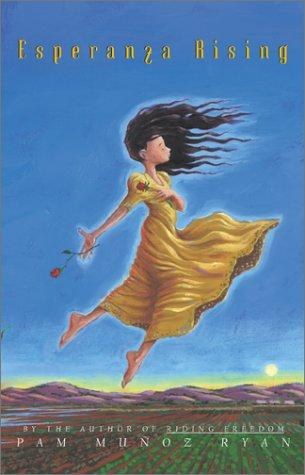
We picked Esperanza Rising as a class text on purpose. It's by Pam Muñoz Ryan, and it's one of the chapter-book texts read in our Reading and Writing classes. It's also on our public Books We Read page, listed with the other novels our classes read together.
The book follows Esperanza Ortega, a girl living comfortably on a ranch in Mexico. When her father dies and the family loses the ranch, everything changes: Esperanza and her mother flee to California during the Great Depression and go to work as migrant farm laborers, work Esperanza has never had to do before. The story covers about a year of her life, ending near her fourteenth birthday.
It's historical fiction, grounded in a real period of American history, and it's been recognized for it. The book won the Pura Belpré Award, given to a Latino or Latina writer whose work best portrays, affirms, and celebrates the Latino cultural experience, and the Jane Addams Children's Book Award. Publishers and reading-level guides generally place it for readers roughly in grades four through six.
As an Amazon Associate we earn from qualifying purchases.
The skill we are building
Esperanza's story is really a story about change: she goes from a girl who has always had things done for her to a girl doing hard, unfamiliar work to help her family survive. That arc gives readers real material for a specific skill — tracking how a character's circumstances change over the course of a book, and how her choices and her sense of herself change along with them, using actual details from the text rather than a general impression like “the book was sad.”
The story also stays close to one year of Esperanza's life, so readers get practice reading a historical period — the Great Depression, migrant farm labor — through one character's experience, rather than as a list of dates and facts. Both are worth practicing directly: not just talking about a character, but pointing to the page that proves it.
How we practice it
Esperanza Rising is one of the chapter-book texts used in our Reading and Writing classes. We don't have more classroom-level detail to share in this post about how this specific unit runs day to day, and we'd rather leave it general than guess at specifics we can't back up. The truest way to see how a book like this gets used in class is to sit in on one yourself.
What you can do at home
If your child is reading Esperanza Rising, ask what's different about Esperanza by the end of the book compared to the beginning — and what, if anything, has stayed the same about who she is underneath the changes. It's a simple question, and it's exactly the kind of thinking the book is built to reward.
If you want to see a Reading and Writing class in person, a single tryout class is $35, and it credits toward your first month if you enroll.
Curious what a Reading and Writing class is like? Come see one for yourself.
Register for a tryout class →