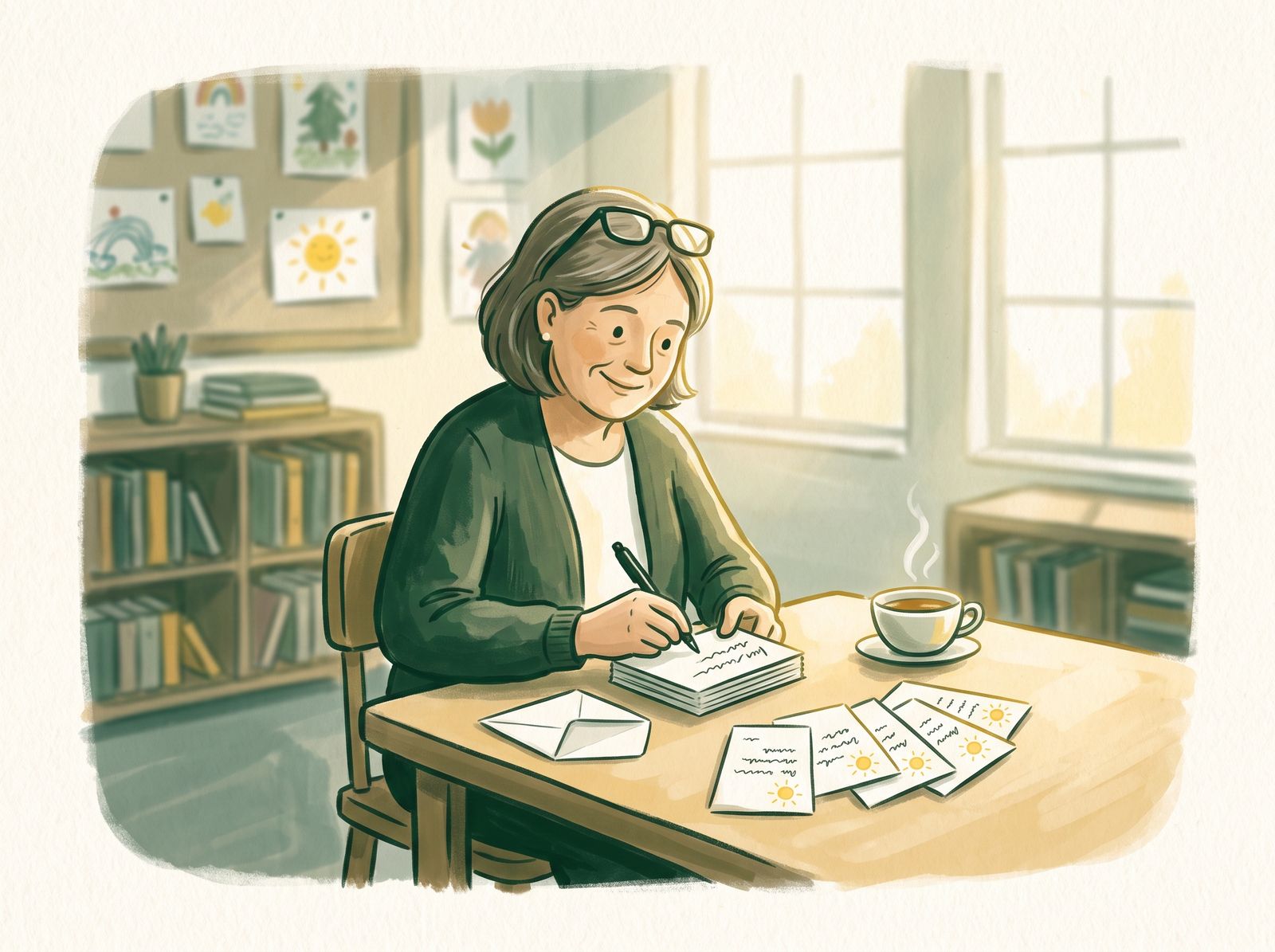
At Beyond Young, sending a note home is a normal part of how our teachers talk with families. Each note is about one child and one moment.
Our teachers call it a "sunshine note": a short note home that is only good news. Teachers of reading and writing, math, Algebra 1, STEM and robotics, 3D printing, public speaking and Round Table, and Scholastic writing all write them. The notes you see here are real, shared with student names removed.
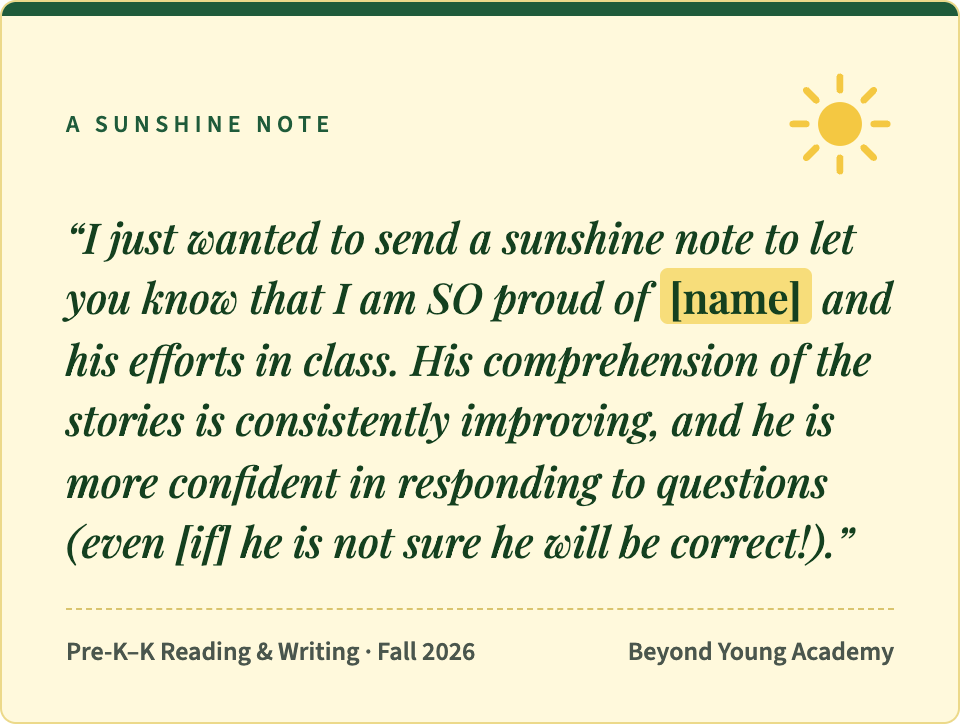
The original sunshine note, shared with the student's name removed.
We want to explain, from an educator's and a child psychologist's point of view, why such a small thing matters.
What a good note actually says
The best notes do not say "so smart." They describe what a child did.
Here are two real notes. One praises a child for using the decoding skills the class practiced. Another describes a child who connected a book to the real world, wrote the idea on the board, and explained it to classmates.
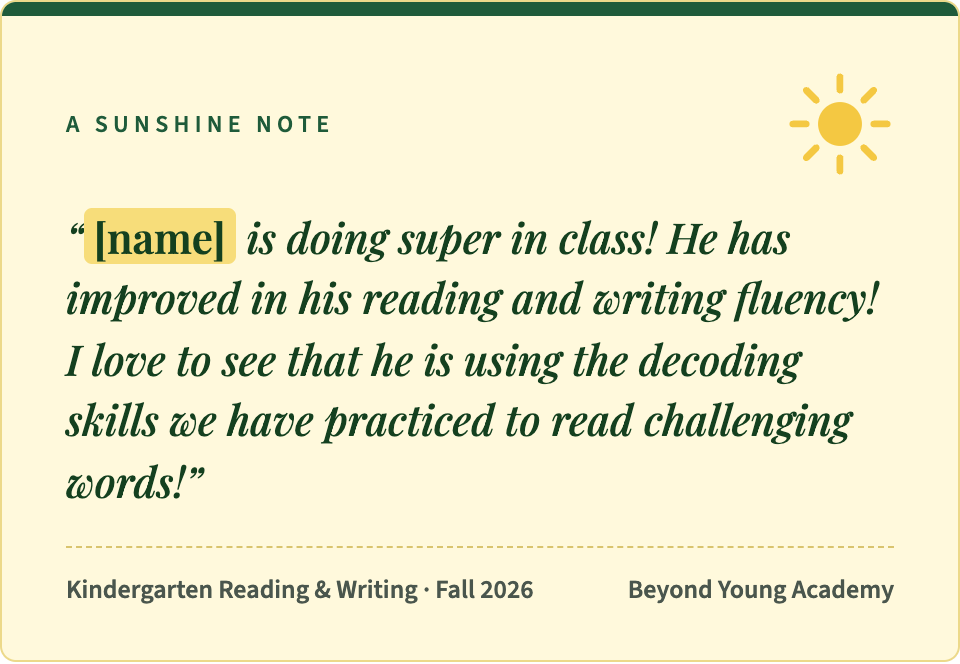
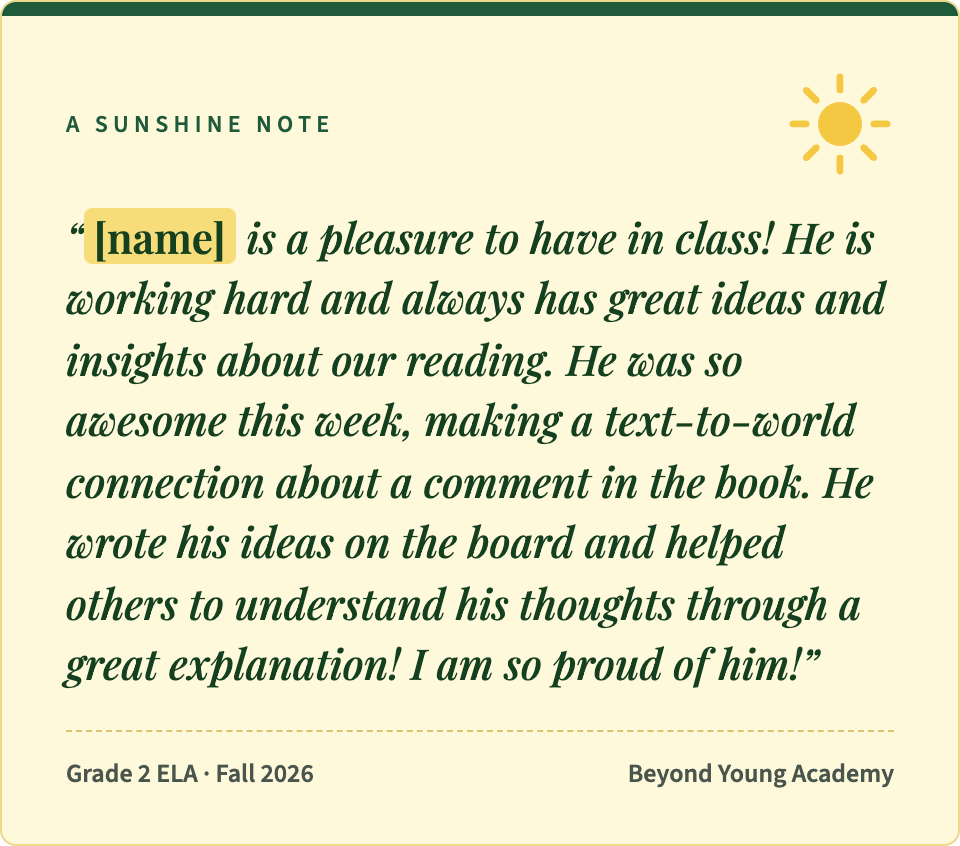
Real notes, with student names removed.
Notice what each one praises: effort, strategy, courage, kindness. This is the heart of what Carol Dweck calls a growth mindset. When we praise the process, a child learns that effort is what counts. That makes it safer to try something hard, and safer to get it wrong on the way.
Why courage and kindness belong in the note
Praising a child for answering when unsure tells them that trying is welcome, even before they are right. That is how children find the nerve to read aloud or speak up.
Praising kindness and helping tells a child something different. They are valued as a person, not only as a student. Children carry that feeling into every class.
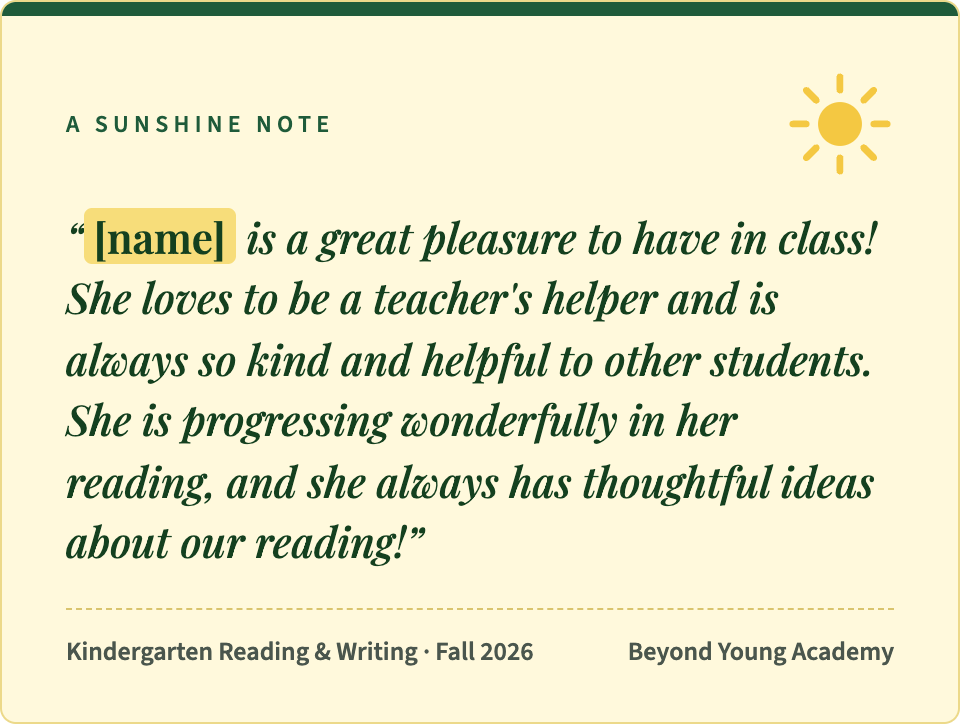
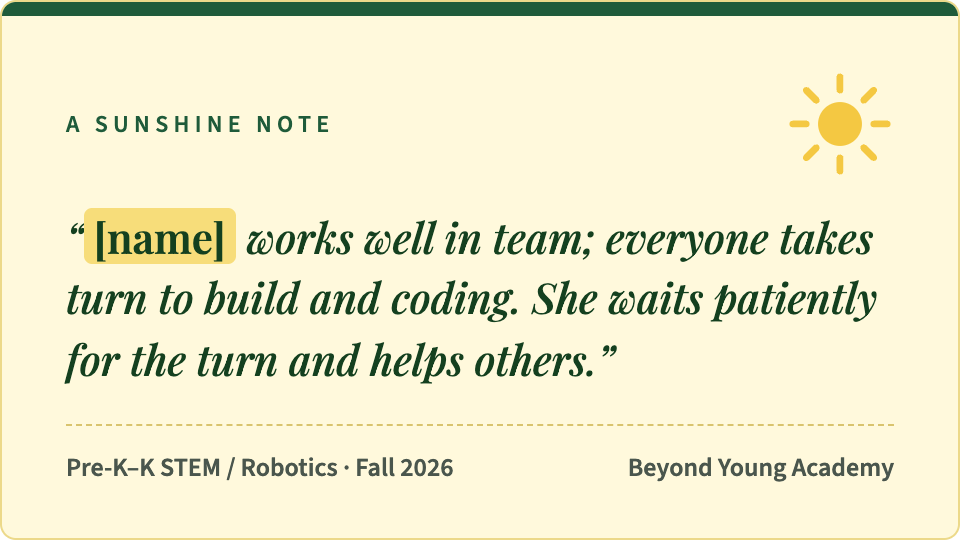
Two more real notes: kindness, and waiting for a turn.
Why being known matters
Self-Determination Theory describes three things that drive a person's own motivation: feeling capable, feeling connected, and feeling some control. A specific note speaks to the first two. It says, "You did this well," and it says, "I noticed you." Motivation that grows from those feelings belongs to the child. It does not depend on a reward or a grade.
Children also tend to rise to what adults visibly believe about them. A note puts that belief on paper, where a child can read it again on a hard day.
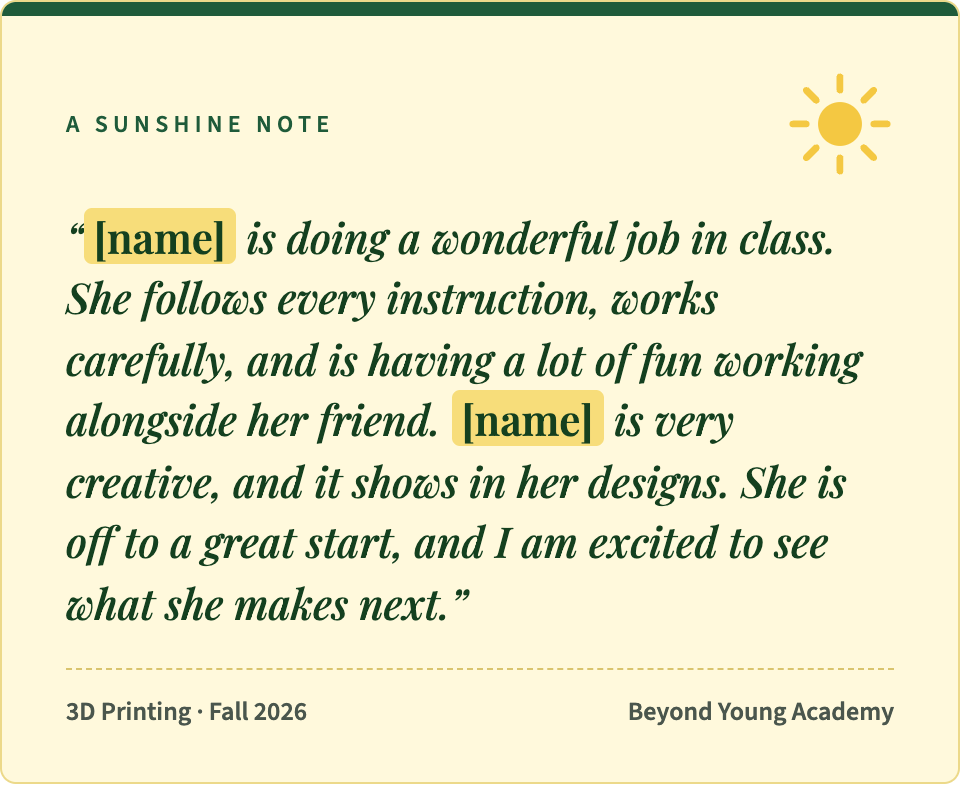
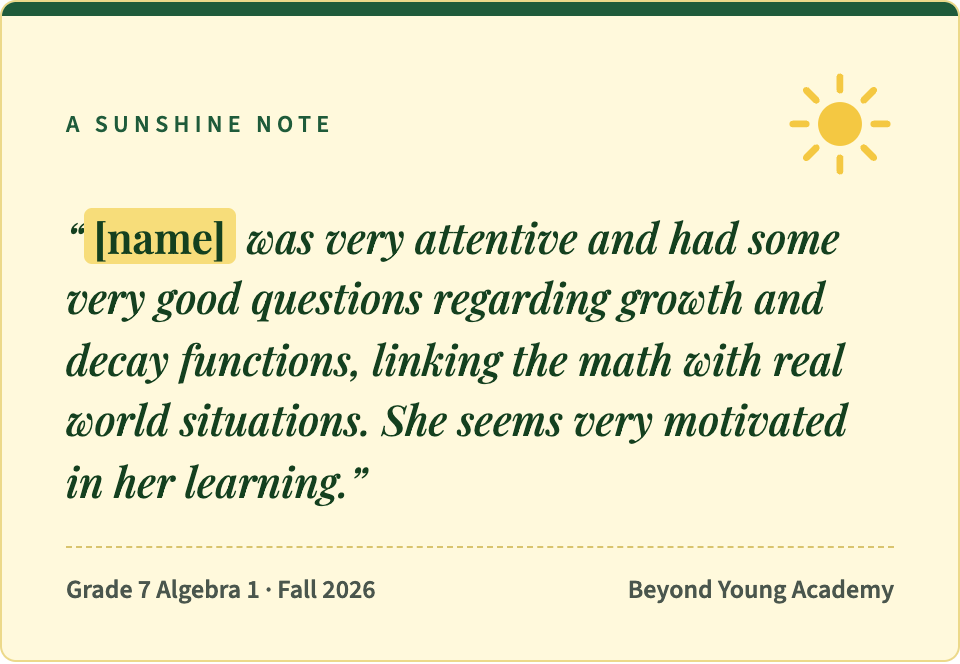
Real notes from a 3D printing class and a Grade 7 Algebra 1 class.
Good news first also builds trust. When a family knows a teacher notices what is going well, later feedback is easier to hear as help. Sometimes a note includes one small, clear goal. One goal, not a list, is something a child can actually act on.
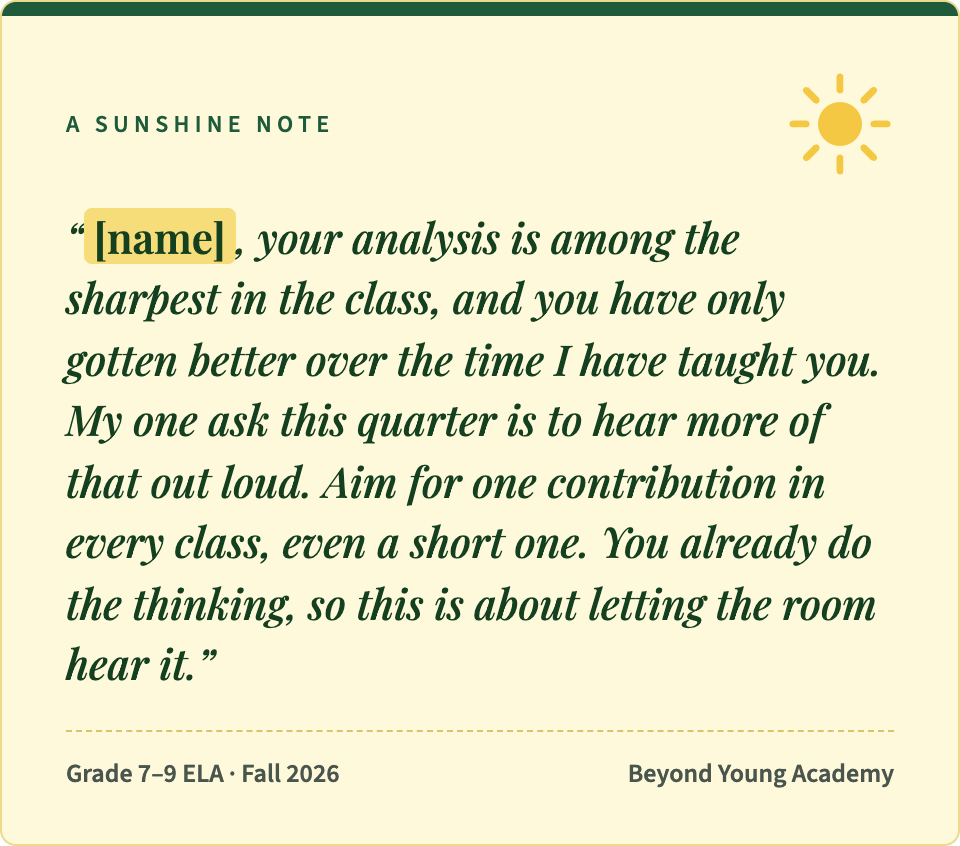
A real note from a Grade 7–9 English class: real praise, then one small goal.

Why small classes make this possible
These notes each describe one child, one moment. A teacher with a very large class rarely gets to see that. In our small group classes, it is everyday work.
That is not about doing more. It is about being close enough to notice.
For parents
If a note comes home, here is a simple way to use it.
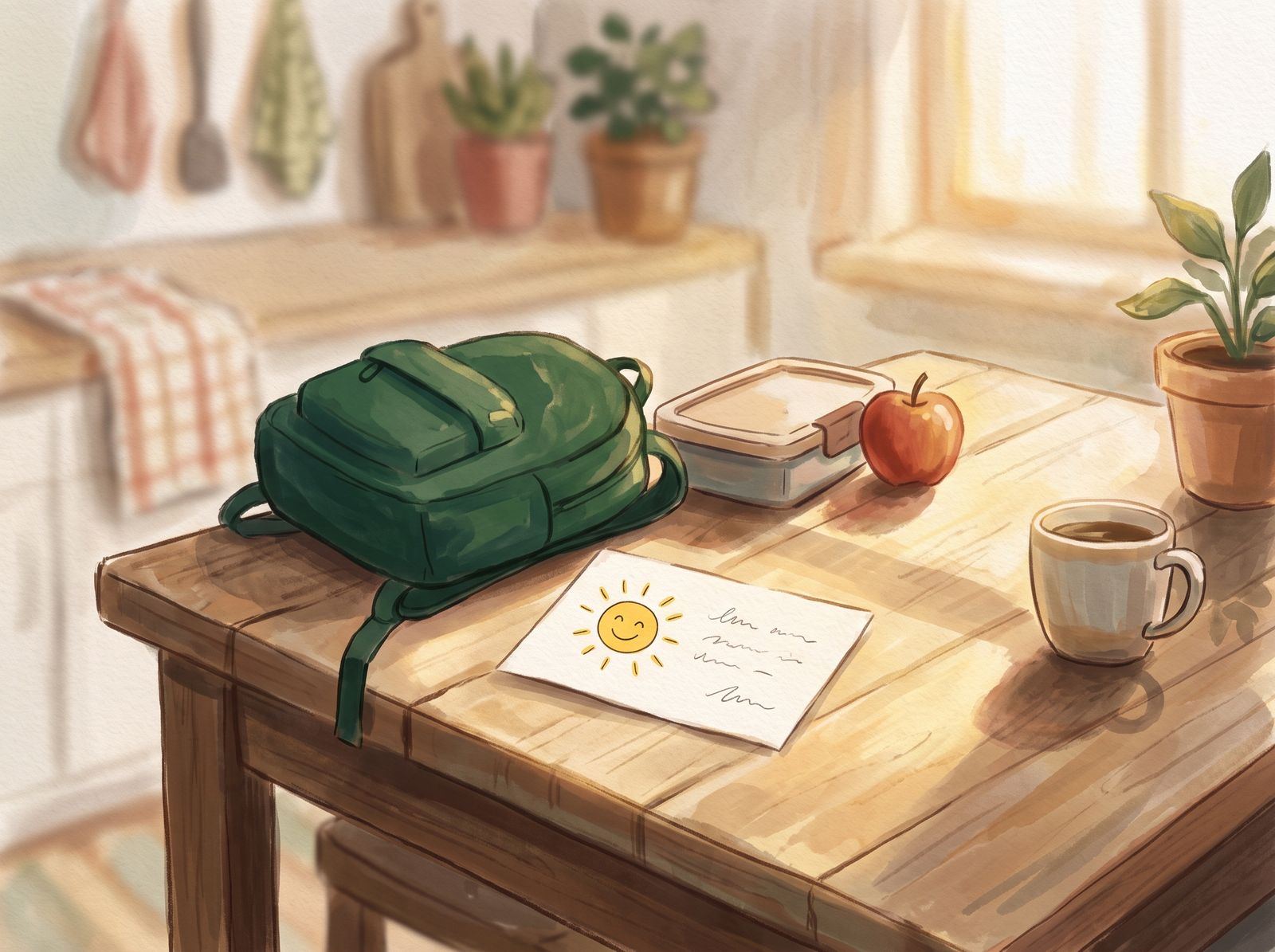
- Read it togetherOut loud, if your child likes that.
- Ask what they are proudest of"What are you proudest of in this note?" Let them choose.
- Pick one thing to practiceJust one, this week.
Once a week, you can also ask what question the class discussed and what their answer was. One of our teachers suggests this habit.
A note is not a promise of any result. It is a small, honest sign that someone is paying attention to your child.
Curious what a class with this kind of attention feels like? Start with one class and see it for yourself.
Try a class →